House of Representatives | 28 May 2026
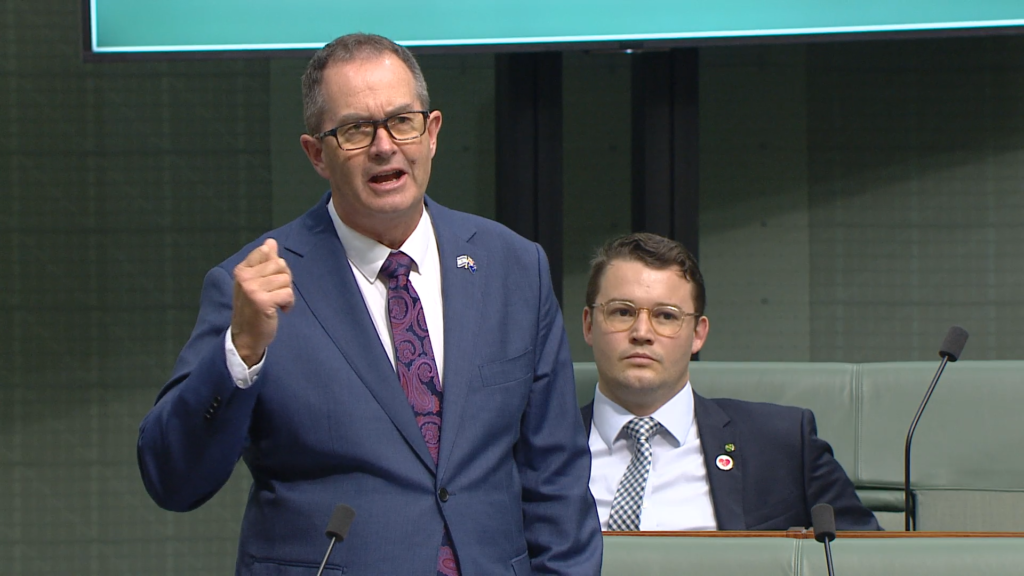
Mr WALLACE (Fisher) (16:01): I want to tell a little story about Dale and Tanya, who are local businesspeople in my electorate. They come from Wurtulla. They received in the last few years an export award for their business. I’m not going to name them because we all know what happens. Some trolls on the other side will—
Government members interjecting—
Mr WALLACE: Oh, you’re going to try and say it doesn’t happen? It happens. So I’m not going to name them. These people won an export business award and—do you know what?—they rang me on Monday night, as a result of these changes, and said, ‘We think we’re going to have to relocate to Singapore.’ Here’s a successful business that was built from a garage, employing Australians and exporting to the world, and, because this government didn’t have the courage to take these tax changes on capital gains tax to an election, like so many other small businesses around this country, they are fearful. They are worried that this government is going to have its hands in their pockets when they go to sell. That is the reality. Australian businesses are very, very worried, because they don’t trust this lot. If this government had any modicum of courage, it would have done what Bill Shorten did and taken its policies to a general election. But they didn’t do that because they knew that in the 2019 election they were resoundingly defeated. So what did they do? They kept it under wraps. They kept it quiet.
You can’t tell me that it’s not a series of policies that this government has held since the 1980s. We know Paul Keating got rid of negative gearing in the 1980s. It lasted less than two years—because what did it do? It forced the price of rents up in capital cities. That is exactly what’s going to happen here. Don’t take my word for it. The government’s own budget papers accept that residential rents will rise. If you talk to any young person, they will tell you the No. 1 challenge they have in buying a home is saving a deposit. If rents go up by as much as, per what some economists are saying, 20 per cent, the more money kids are paying in rent, the less money they’re stashing away for a deposit. That is the reality. That is the reality. You are making it harder. The government is making it harder for younger people to save for a house. That is the reality, on your own budget figures—on the government’s own budget figures.
Honourable members interjecting—
The DEPUTY SPEAKER (Ms Claydon): Members, order!
Mr WALLACE: Even if you talk about the five per cent deposit, you still need five per cent. You still need five per cent. Five per cent of $1 million is $50,000 on the Sunshine Coast—a $50,000 deposit. The member for Hughes is saying, ‘What’s $50,000? It’s nothing.’ But $50,000 is a lot of money. That $50,000 is a lot of money, and—
Mr Moncrieff: On a point of order—I’ve been misrepresented. That’s not what I said.
The DEPUTY SPEAKER: You’ll have an opportunity at a later date to actually raise that matter. Member for Fisher, resume. Having a little less interjections so that I can hear clearly what the member for Fisher is saying would be helpful.
Mr WALLACE: That would be great, thank you. It is taking up my time as well. This government has no courage. If it had the courage, it would have taken these policies to the election. But they didn’t. The coalition is offering sensible alternatives. We are offering to index people’s incomes, their thresholds, their payment thresholds. This will overcome bracket creep. That is one of the single largest problems in this country that just promotes lazy governments, and we will fix that. It’s one of the best things that came out of the budget-in-reply—
The DEPUTY SPEAKER: The call goes to the member for Menzies.
[ENDS]
Media Contact: Brendan West – 0402 556 646 – Brendan.west@aph.gov.au