MEDIA STATEMENT
1 October 2026
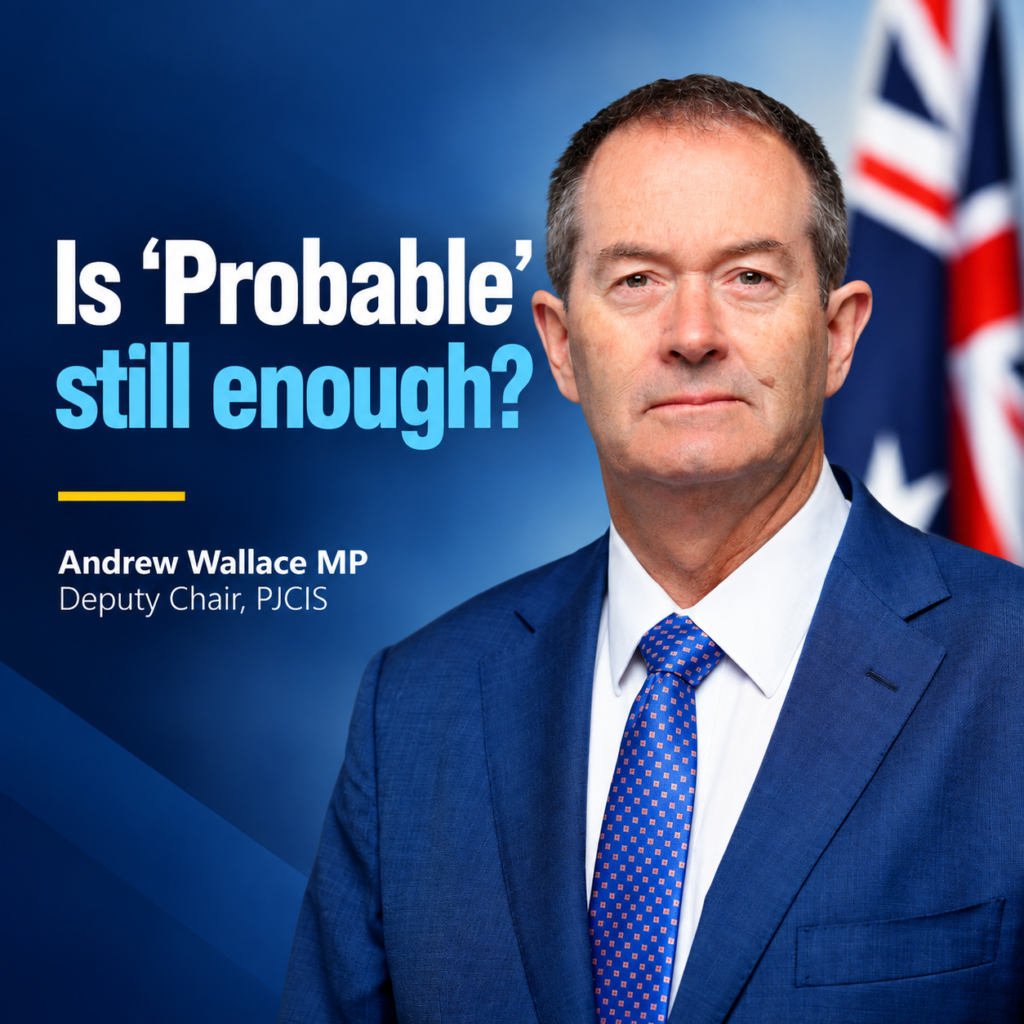
Less than two weeks ago, I spoke about Australia’s national terrorism threat level set at “Probable” and asked whether that setting still adequately reflects the security environment we now face.
Events since then only reinforce why that question needs to be asked.
In the United Kingdom, over the weekend five men were arrested near RAF Fairford on suspicion of explosives offences and preparation of a terrorist act. British counter-terrorism police continue to investigate the incident, including whether individuals may have been acting knowingly or unknowingly on behalf of a foreign state. Remarkably, those 5 individuals are out on bail.
Police have since confirmed no explosive devices were found in the vehicles, although petrol was recovered, and the investigation remains ongoing.
Then yesterday, passengers and crew aboard Flydubai Flight FZ1073, travelling from Dubai to Tel Aviv with 174 people on board, were forced to intervene after a violent incident in the cockpit.
Israeli authorities have said they suspect the co-pilot attempted to take control of and crash the aircraft after attacking the captain. The aircraft lost thousands of feet of altitude before control was regained by passengers and crew and it landed safely in Saudi Arabia.
The motive remains under investigation, but the incident is being examined by Israeli authorities as a suspected terrorist attack.
These incidents come against an international security environment in which terrorism, violent extremism and state-sponsored or proxy activity continue to present serious threats to Western nations.
Here at home, we already know Australia’s security environment has deteriorated significantly.
Since the Bondi terrorist attack, Australian authorities have disrupted four plans subsequently assessed as major terrorism plots, while ASIO has disclosed another 16 serious but less imminent terrorist plots have also been stopped.
Australia’s national terrorism threat level is set by ASIO, not politicians, and that is exactly how it should be.
I am not questioning ASIO’s previous decisions about where that level has been set.
But the current level of “Probable” means a terrorist attack is considered probable and there are concerns of a plausible threat. The next level, “Expected”, applies where there are concerns of a specific threat.
Given what we are seeing both at home and abroad, I believe Australians are entitled to ask again:
Is “Probable” appropriate?
At what point does the continued deterioration of the security environment warrant Australia moving to a higher state of preparedness?
And if the definition of “Expected” under the existing framework means the threshold cannot appropriately reflect a broader and rapidly deteriorating threat environment, then we should examine whether that framework remains fit for purpose.
This is not about creating fear. It is about preparedness.
Our intelligence, counter-terrorism and law enforcement agencies do extraordinary work every day to keep Australians safe.
Government and Parliament must ensure they have the threat settings, resources and frameworks they need to confront an increasingly dangerous security environment.
[ENDS]
Media Contact: Brendan West – 0402 556 646 – Brendan.west@aph.gov.au